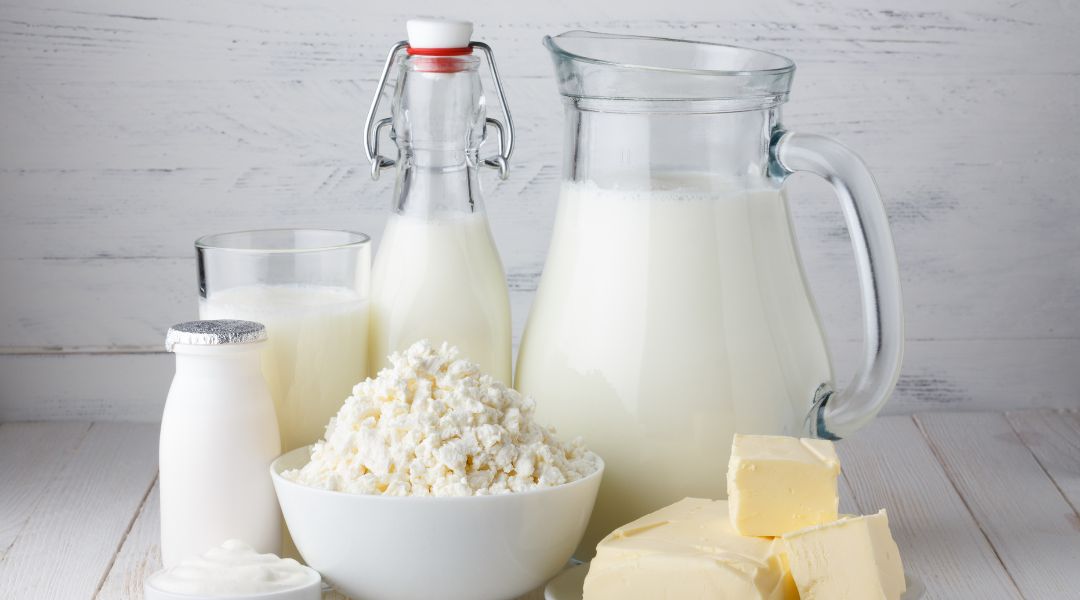
Richer, creamier milk that falls halfway between milk and cream: 6% milk has been getting attention since it arrived on the market. But what's actually in it? Is it a better choice than 0 %, 1%, 2%, or 3.25% milk?
Let’s take a look at its advantages, nutritional value, and best uses!
Key takeaways
- 6% milk is a blend of milk and cream. It is higher in fat and calories while still providing the key nutrients found in milk (between 0% and 3.25% milk fat).
- It is not necessary for most people, but may be useful for increasing the energy density of the diet or for certain culinary uses.
- Its rich, creamy and smooth texture makes it an interesting option for replacing some of the cream in certain recipes.
In this article :
What is 6% Milk Made Of?
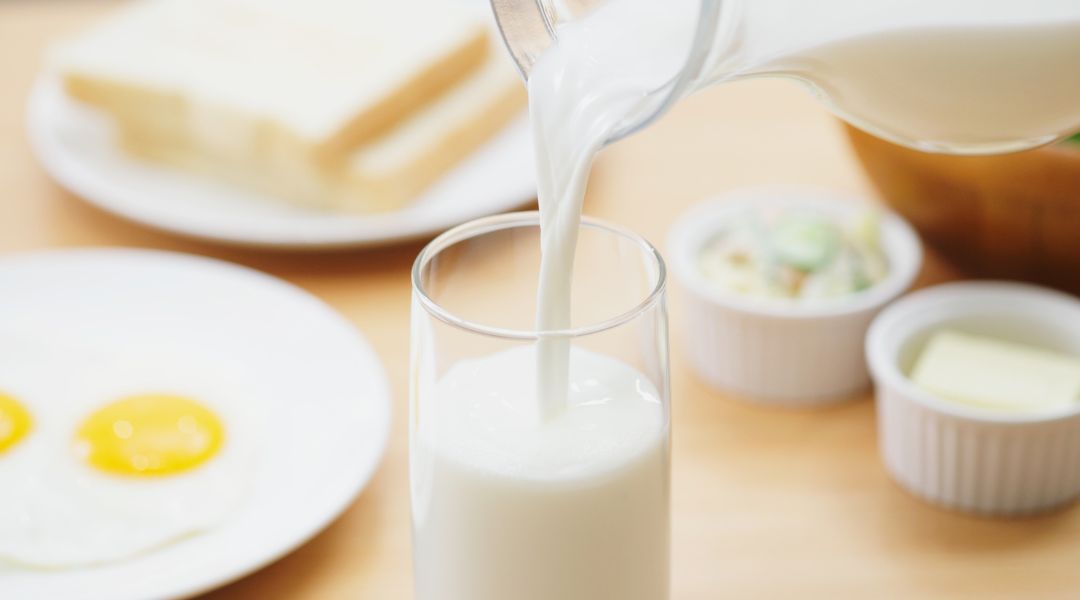
The versions currently offered by Québon® and Sealtest® are sold in 4 L cartons and contain only three ingredients: milk, cream, and vitamin D3.
One cup (250 ml) of 6% milk provides approximately 220 calories, 15 g of fat, 8 g of protein, 250 mg of calcium, and 4.5 µg of vitamin D. The main difference from lower-fat milk is, therefore, the amount of fat.
In other words, 6% milk retains several of the interesting nutritional qualities of milk, notably its protein, calcium, potassium, and vitamins. However, it provides more fat and energy (calories) for the same serving size.
Is It Suitable for Everyone?
For most of the population, choosing 0 %, 1%, 2%, or 3.25% milk already provides the main nutrients in milk. Six percent milk does not offer twice as much protein, calcium, or vitamins: it's mainly the fat and calories that increase.
This doesn't mean you have to completely avoid 6% milk; you should instead consider your overall diet. Someone who already regularly consumes cheese, yogurt, milk, butter, oils, or fatty foods may not necessarily benefit from systematically adding a higher-fat milk.
Thus, unless you have a preference for its texture or a specific need, there is no need or added benefit to automatically switching from your usual milk to the 6% version.
A Nuance on Milk's "Saturated" Fats
Since 6% milk is higher in fat, it is also higher in saturated fat than lower-fat milks: one cup of 6% milk contains 9 g of saturated fat, which is 48% of the recommended daily value.
That said, the saturated fats found in some dairy products do not appear to have the same impact on cardiovascular health as those from certain other sources. In the case of milk, its food matrix (the set of nutrients and compounds that form the food and interact with each other) could play a role in how fats are digested and used by the body.
Therefore, you don't necessarily have to avoid 6% milk solely because of its saturated fat content, but rather enjoy it in moderation while considering the overall quality of your diet and your specific needs.
Who Might Benefit from 6% Milk?

Six percent milk can be particularly beneficial for people who have high energy needs or who have trouble eating enough, such as some older adults or those with a small appetite. Since it is richer in fat and calories than regular milk, it helps to increase the energy density of meals and snacks without increasing their volume. It can thus be added to coffee, smoothies, soups, sauces, or certain recipes to easily enrich the diet.
To find out if this strategy is relevant to your situation, a registered dietitian can support you based on your needs.
Can 6% Milk Replace Cream in Cooking?
One of the main benefits of 6% milk is its rich, velvety, and creamy texture. It can add a nice creamy consistency to sauces, soups, and desserts while being lower in fat than 15% or 35% cream. Its very simple ingredient list is also appealing: milk, cream, and vitamin D3.
Conversely, some creams contain thickening, emulsifying, or stabilizing agents, such as carrageenan or cellulose gum. These additives are authorized and safe in the amounts used, but some people may prefer a shorter ingredient list. Furthermore, data suggest that some of these additives, such as carrageenan, could contribute to digestive discomfort or inflammation in some sensitive people, but the effects seem to vary depending on the type of additive, intestinal health, and the individual's dietary context.
Six percent milk can therefore be a nice middle ground to achieve a creamy texture without using a richer cream or one with a longer ingredient list.
3 Ways to Use 6% Milk in Cooking

- In sauces and soups: It can replace part or all of the cream in a rosé sauce, mushroom sauce, or soup to achieve a creamier texture while reducing the amount of fat compared to a richer cream.
- In desserts: It can be used in puddings, dessert creams, cakes, muffins, or other recipes where a richer texture is desired.
- In coffee: For someone who usually uses coffee cream, 6% milk can be an interesting compromise: it is rich enough to add creaminess while being less fatty than cream.
Its Format: Something to Consider
Six percent milk is currently only offered in a 4 L size. For someone who only needs a small amount for a recipe or their coffee, this format may be less practical and increase the risk of waste.
In this context, it may make more sense to purchase it for planned use: a creamy sauce recipe, several desserts, a soup, or a period when the whole family consumes it.
6% Milk: The Choice Is Yours
Six percent milk is neither a miracle food nor a product to avoid. It is simply a new, richer, and creamier option that can be particularly useful for certain culinary applications or specific health conditions. Because it is higher in total and saturated fat, it is still best consumed in moderation for most people.
Are you wondering which food choices truly match your needs? A registered dietitian can help you evaluate your diet, goals, and situation to guide you toward the best options for you, especially when choosing among the many products offered at the grocery store. Book an appointment with one of our dietitians today to receive personalized advice and make food choices that truly suit you.