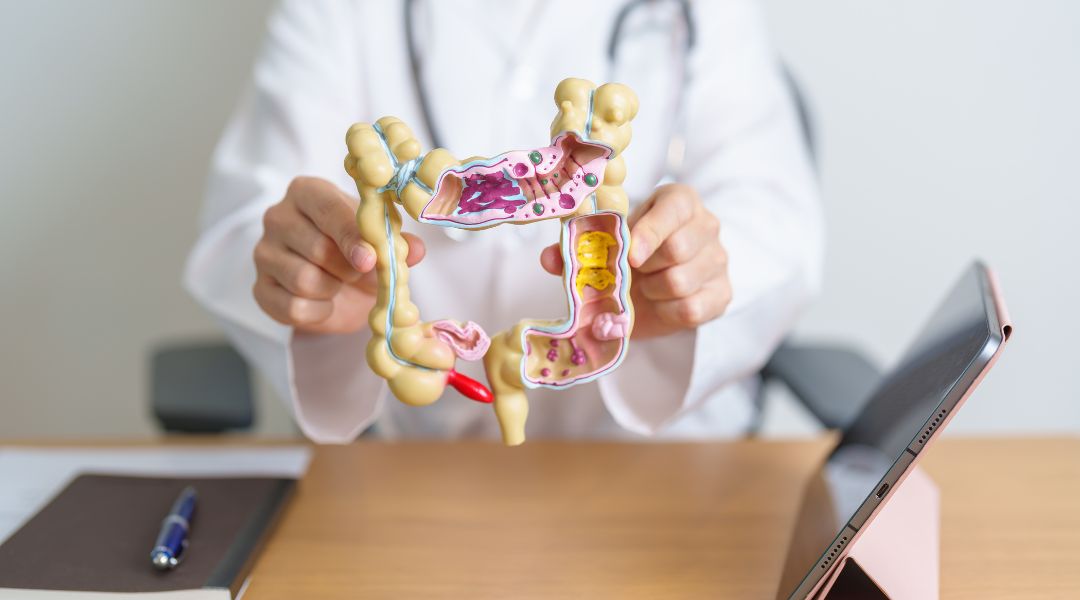
Irritable bowel syndrome (IBS) is considered a disorder of gut–brain interaction, as no identifiable anatomical abnormality is typically observed (2).
Symptoms, often triggered by diet or stress, are mainly characterized by abdominal pain related to defecation (3). They are accompanied by altered bowel habits (diarrhea or constipation), a sensation of incomplete evacuation, urgency or straining, abdominal distension, and sometimes mucus in the stool (3).
Several physiological mechanisms are involved (2):
- Visceral hypersensitivity: increased sensitivity to normal volumes of intestinal gas, amplifying pain.
- Altered motility: slow transit may cause constipation, while rapid transit is associated with diarrhea.
- Exaggerated postprandial response: an enhanced gastrocolic reflex can trigger pain and discomfort after meals.
- Dietary factors: highly fermentable carbohydrates increase colonic motility and secretions.
- Psychosocial factors: stress, anxiety, and sleep disturbances influence symptom onset and persistence.
Nutritional Therapies
First line: Symptom management
Initial management focuses on individualized dietary modifications based on IBS subtypes (diarrhea, constipation, mixed) and symptom severity:
- Meal schedule: prioritize regular, small meals, eaten calmly and at an appropriate pace.
Common irritants to limit: caffeine, alcohol, high-fat meals (≥20–30 g/meal), or spicy foods. - Reduce aerophagia: to relieve bloating, avoid carbonated beverages and chewing gum (5, 6).
- Polyols to limit: these fermentable carbohydrates (e.g., sorbitol) can worsen diarrhea symptoms (6).
- Fiber:
- Soluble fibers (e.g., psyllium, chia, oats) and adequate hydration improve transit and stool consistency, while insoluble fibers (e.g., wheat bran) may worsen symptoms in IBS-D (6).
- Introducing 2 tbsp of flaxseed per day over 3 months may relieve constipation symptoms (7).
- Physical activity: increasing activity levels helps reduce gas and improve transit speed (7, 8).
Second line: Low FODMAP diet
The low FODMAP diet (fermentable oligosaccharides, disaccharides, monosaccharides, and polyols) involves temporarily reducing fermentable carbohydrates that increase intestinal water volume and colonic fermentation, leading to gas production, bloating, and digestive symptoms (4). Follow-ups by a registered dietitian is strongly recommended during this protocol (4).
The protocol includes three phases (6):
- Restriction phase: reduce FODMAPs to relieve symptoms (2–6 weeks).
- Gradual reintroduction phase: identify individual triggers (6–8 weeks).
- Personalization phase: tailor the diet to support long-term dietary variety while accounting for individual trigger foods.
Two meta-analyses show that a low FODMAP diet, with or without multi-strain probiotics, improves overall IBS symptoms, particularly abdominal pain and bloating (9, 10).
Prolonged FODMAP restriction may reduce the intake of certain nutrients (iron, thiamine) and beneficial gut bacteria, such as Bifidobacteria. It may also increase the risk of anxiety or disordered eating. When supervised by a registered dietitian and completed through all three phases, long-term risks are generally minimal while maintaining symptom relief (6).
Alternative Therapies
Peppermint Oil:
- Indication: Relief of abdominal pain (6)
- Biological actions:
- Relaxes intestinal muscles via calcium channel blockade.
- Modulates visceral sensitivity, exhibits antimicrobial, anti-inflammatory effects and influences psychosocial distress (6).
- Clinical evidence:
- Meta-analyze of 12 randomized controlled trials (RCTs) (835 patients) have shown benefits despite often short or small studies (11).
Hypnotherapy:
- Biological actions: Normalizes gastrointestinal function by modulating motility, visceral sensitivity, and immune response.
- Mechanism: Uses repeated suggestions and metaphors, e.g., imagining swallowing a “medicine” to relieve pain, bloating, and bowel symptoms (5).
- Clinical evidence:
- RCTs show durable efficacy comparable to the low FODMAP diet, with no known side effects
- Typically delivered in 6–12 one-hour sessions with a practitioner specialized in IBS (5, 12, 13).
Pharmacological treatments:
- Antispasmodics: for abdominal cramps.
- Laxatives: for constipation.
- Rifaximin: for bloating related to microbiota imbalance.
- Low-dose antidepressants: to modulate pain and the gut–brain axis (5).
Diet is one of the most powerful tools for providing lasting relief from the symptoms of irritable bowel syndrome (IBS). However, every patient is unique: personalized support from a registered dietitian is essential to precisely identify dietary triggers and digestive irritants.
Whether it's structuring a low-FODMAP diet or adjusting lifestyle habits, our clinical nutrition team ensure safe and effective care. Their goal? To reduce long-term intestinal discomfort while preserving the pleasure of eating and optimal dietary diversity.
Offer your patients the expertise of a registered dietitian: find the TeamNutrition service point near your patients.
References
- Palsson, O. S., Whitehead, W., Törnblom, H., Sperber, A. D., & Simren, M. (2020). Prevalence of Rome IV functional bowel disorders among adults in the United States, Canada, and the United Kingdom. Gastroenterology, 158(5), 1262-1273.
- Ford, A. C., Lacy, B. E., & Talley, N. J. (2017). Irritable Bowel Syndrome. The New England journal of medicine, 376(26), 2566–2578.
- Lacy, B. E., Mearin, F., Chang, L., Chey, W. D., Lembo, A. J., Simren, M., & Spiller, R. (2016). Bowel disorders. Gastroenterology, 150(6), 1393-1407.
- Drossman, D. A., & Hasler, W. L. (2016). Rome IV—functional GI disorders: disorders of gut-brain interaction. Gastroenterology, 150(6), 1257-1261.
- Lacy, B. E., Pimentel, M., Brenner, D. M., Chey, W. D., Keefer, L. A., Long, M. D., & Moshiree, B. (2021). ACG clinical guideline: management of irritable bowel syndrome. Official journal of the American College of Gastroenterology| ACG, 116(1), 17-44.
- Singh, P., Tuck, C., Gibson, P. R., & Chey, W. D. (2022). The role of food in the treatment of bowel disorders: focus on irritable bowel syndrome and functional constipation. Official journal of the American College of Gastroenterology| ACG, 117(6), 947-957.
- McKENZIE, Y. A., Bowyer, R. K., Leach, H., Gulia, P., Horobin, J., O'Sullivan, N. A., ... & (IBS Dietetic Guideline Review Group on behalf of Gastroenterology Specialist Group of the British Dietetic Association). (2016). British Dietetic Association systematic review and evidence‐based practice guidelines for the dietary management of irritable bowel syndrome in adults (2016 update). Journal of Human Nutrition and Dietetics, 29(5), 549-575.
- Villoria, A., Serra, J., Azpiroz, F., & Malagelada, J. R. (2006). Physical activity and intestinal gas clearance in patients with bloating. Official journal of the American College of Gastroenterology| ACG, 101(11), 2552-2557.
- Dionne, J., Ford, A. C., Yuan, Y., Chey, W. D., Lacy, B. E., Saito, Y. A., ... & Moayyedi, P. (2018). A systematic review and meta-analysis evaluating the efficacy of a gluten-free diet and a low FODMAPs diet in treating symptoms of irritable bowel syndrome. Official journal of the American College of Gastroenterology| ACG, 113(9), 1290-1300.
- Lei, Y., Sun, X., Ruan, T., Lu, W., Deng, B., Zhou, R., & Mu, D. (2025). Effects of probiotics and diet Management in Patients with Irritable Bowel Syndrome: a systematic review and network Meta-analysis. Nutrition reviews, 83(9), 1743-1756.
- Alammar, N., Wang, L., Saberi, B., Nanavati, J., Holtmann, G., Shinohara, R. T., & Mullin, G. E. (2019). The impact of peppermint oil on the irritable bowel syndrome: a meta-analysis of the pooled clinical data. BMC complementary and alternative medicine, 19(1), 21.
- Peters, S. L., Yao, C. K., Philpott, H., Yelland, G. W., Muir, J. G., & Gibson, P. R. (2016). Randomised clinical trial: the efficacy of gut‐directed hypnotherapy is similar to that of the low FODMAP diet for the treatment of irritable bowel syndrome. Alimentary pharmacology & therapeutics, 44(5), 447-459.